
Let’s talk about death and dying. On purpose. Out loud. At the dinner table. Because we all have two things in common. We were all born and we’ll all die.
We’re all promised an end date, not one of us is promised tomorrow. Yet we spend our entire lives living as if we have forever. The day we die is promised to every single one of us… and yet we will spend our whole lives doing everything we can to avoid planning or talking about it.
I understand why. Giving birth is most often surrounded by joy and anticipation and hope. Death is surrounded by pain. The grief that comes with losing someone you love is one of the most unimaginable kinds of suffering there is this side of heaven. That pain makes death difficult to talk about. Sometimes even traumatic. So we avoid it. We change the subject. We table it for later. We assume there will be time.
But, there might not be.
The Day I Lost Control
I’ll never forget the day I faced a semi truck about two miles from my exit to home. It was an ordinary day. I woke up, went to work and started my trip home as if I expected to arrive safely just like I had experienced every other day of my life.
I plan every aspect of my life. But that day, as I faced oncoming traffic, my tires spinning on black ice, and the headlights of a semi barreling at me at full speed I quickly understood I have zero control over the moment I will leave this earth.
My life flashed before my eyes. Somehow I walked away from that accident. I still can’t fully make sense of it.
But what I took away from that moment was that I wasn’t scared to die. Instead, I was pissed I didn’t get to say goodbye.
Living after that was the most complicated journey I’ve ever navigated. I’d wake up mad that I was still here and then go to bed at night thankful I made it through another day. As I processed the trauma of what happened, there were moments I would’ve given anything just to have had the chance to say goodbye to the people I loved. I didn’t know then that this accident was preparing me for what came next.
Over the next year I went through trauma counseling and slowly began to rebuild.
Just one year later I learned I had ALS. A neurodegenerative disease that is 100% fatal with no cure and no way out.
I didn’t tell anyone at first. I turned to God. I couldn’t believe it. Looking back though, I’m not sure why I was so surprised. We’re all dying. I guess I had planned on living to 100. I was only 42 years old. How could this be? During that next week I prayed and prayed, asking God for anything else. Anything but this.
The Question That Changed Everything
Through that quiet time of reflection, God asked me if I still believed what I said I believed.
Instantly I knew what that meant.
Was I scared to die? The whole year before my diagnosis I’d told myself and everyone around me that I wasn’t scared to die. As the headlights closed in on me, all I could think of was that I didn’t get to say goodbye. I meant it when I said I wasn’t scared to die. And sitting with my diagnosis that week I realized I still meant it. I still wasn’t scared to die.
It was then that the ground beneath me shifted.
I realized that God had shown me favor on that interstate that. He answered my prayers. I’d pleaded for my life not because I was scared to die but because I didn’t get to say goodbye. And a terminal diagnosis… was my opportunity to say goodbye. It was an answer to prayer I never expected to receive in the form I received it.
From that moment forward, talking about death and dying became the dinner table conversation I realized we should’ve been having all along. I was almost gone in the blink of an eye and I’d still been living as if I had forever.
What We Should All Be Saying Out Loud
Your end of life journey is being lived out right now. You may only have minutes or hours left. It’s possible you have days. At best you have months or years. Regardless, you’re one heartbeat closer to your last right now.
If you don’t talk about how your name and your life will be honored when you’re gone, someone else will make those decisions for you.
Here are five conversations worth having today:
1. Medical wishes in a crisis. A DNR, or Do Not Resuscitate order, tells emergency responders and medical staff what interventions you do and do not want if your heart stops or you stop breathing. Without one, every possible measure will be taken regardless of your wishes. This document gives you a voice in the moments when you can no longer speak for yourself. Pair it with an Advanced Directive, which goes deeper to outline your wishes around life support, feeding tubes, ventilators and pain management. These documents aren’t about giving up. They are about being heard when you’ll need it most.
2. Who speaks for you? A healthcare proxy or medical power of attorney designates the person who makes medical decisions on your behalf if you can’t. Choose someone who knows your values, who can hold their emotions under pressure and who’ll honor what you want even if it’s not what they want. Have that conversation with them directly and make sure they are willing to carry that responsibility.
3. What happens to what you leave behind? A will or trust ensures that your belongings, your finances and your wishes for your children or dependents are handled the way you intended. Dying without one hands those decisions to the state. Writing a will isn’t morbid. It’s one of the most loving things you can do for the people you will eventually leave behind.
4. How your life is remembered. Your obituary is your last introduction to the world. If you don’t write it or at least guide it, someone else will write it for you, and they might leave things out that mattered deeply to you. Think about what you want people to know about who you were, not just what you did. Think about the tone. Think about what you want the last public words about your life to say. And then write them yourself or sit down with someone you trust and tell them exactly what you want said.
5. What your final service looks like. Burial or cremation? A celebration of life or a traditional funeral? The songs you want played. The people you want to speak. Whether you want people to wear black or show up in bright colors because you lived loud and you want to go out the same way. These details matter. Not for you after you are gone but for the people you are leaving behind who will need something to hold onto. Writing my obituary is one of the most treasured opportunities I’ve ever had. Give your loved ones this gift while you still can.
All of these conversations are worth having. And, it’s ok if you change your mind. Evaluate your end of life wishes and documents yearly, unless you are facing terminal disease. Evaluate and communicate more often if your end-of-life journey is in writing. That awareness has more urgency attached.
Start the Conversation Today
You’re still here today. That’s not nothing. It’s everything.
Start talking about death and dying like you are promised only this moment, because that’s the only thing any of us is actually promised.
It doesn’t have to be heavy. It doesn’t have to be a formal sit-down conversation with a lawyer present. It can start over coffee. It can start with “hey, I’ve been thinking about something.” It can start with sharing this post with someone you love and saying let’s talk about this.
Death isn’t the enemy. Silence is.
Be sure to check out my conversation with palliative care chaplain, Cody Hufstedler – Host of the Dying to Tell You Podcast! In this episode we get excited about death and dying. Be sure to follow for great conversations from others facing their dying day with joy, hope and peace.
The Embracing the End series was written from inside this journey. Raw, honest and yes… occasionally funny. Because if you can appreciate death and dying jokes at the dinner table, we’ll get along great.
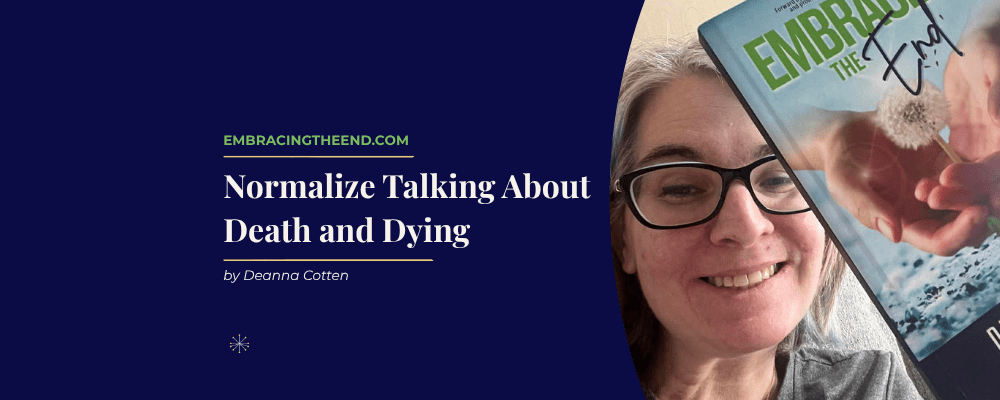
Embracing the End was written while fighting for my life in hospice. Grab a signed copy here.
Embracing the End… Again was written when I unexpectedly didn’t die… and had to figure out what comes next. Grab a signed copy here.
Want both? Grab the complete bundle and save with free shipping.
Disclaimer: I’m not a doctor or medical professional. Everything I share on this site is based on my own personal experience living with ALS. Nothing on this site should be used to diagnose, treat or make medical decisions. Please consult your healthcare provider for medical advice specific to your situation.


Leave a Reply