
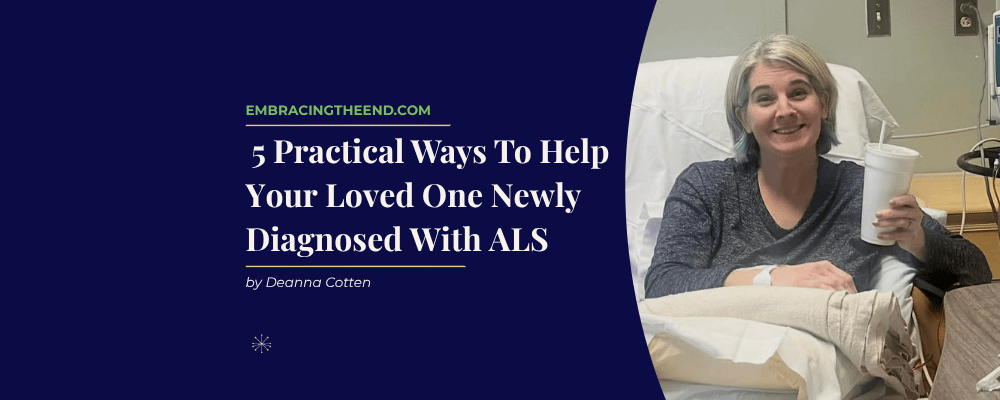
When someone you love is diagnosed with ALS… everything changes. Not just for the person diagnosed. But for you too. This diagnosis lands hard on everyone involved.
There’s a moment where life splits into two parts: before the diagnosis… and everything after. And if you’re on the outside looking in, you’re probably asking yourself what do I say, what do I do, and how do I help.
I’ve lived this from the inside. I remember the dramatic and urgent response from within and from everyone around me in the days following my own ALS diagnosis. And while every person and every journey is different, there were a few things that mattered more than anything else in those early days. I hope this helps you navigate this season with your loved one.
1. You Can’t Fix It. So Just Show Up.
You can’t fix it. You can’t take it away. There is no cure. ALS is 100% fatal. This is probably the most helpless you’ve ever felt. You can’t change the situation, but you can show up.
Sit with them. Listen. Let there be silence if there needs to be. Some of the most meaningful moments don’t come from what people say… they come from the fact that they stayed.
I know it feels helpful to start researching every possible way your loved one might recover. But there’s a rabbit hole of very costly scams associated with this disease. Be careful throwing research and products with false hope attached at someone who’s just been handed a terminal diagnosis like ALS.
I understood something many people around me didn’t in those early days. There’s no cure and this disease is a guaranteed exit from this life. I was trying to process that reality while others were pressuring me to spend countless hours reading articles with false hope and to risk thousands of dollars on products that wouldn’t save my life. I didn’t want to spend my remaining time and money that way. Your loved one might not want to either. Respect that and just be present. Don’t tell them they are giving up. They aren’t. Pushing false hope can make your loved one feel guilty for a diagnosis that’s completely out of their control.
There’s no linear path for hearing that you have a disease that will strip you of your dignity and independence and then kill you. Some days the grief washed over me and paralyzed me with fear. Other days I felt inspired and almost excited that my time was near. This roller coaster is very difficult for loved ones to ride along on.
Many people in my life quietly exited. But so many others who hadn’t been around much suddenly surfaced. I had to learn not to take any of that personally because everyone around me was grieving too. What I can tell you is that I look back and deeply appreciate the people who buckled up and took the front seat on that roller coaster ride. I know it wasn’t easy. But simply being present to listen, hear and understand my feelings made all the difference. The people who could hold their own emotions while still showing up for me were the ones who left the biggest mark.
2. Let Them Make Life and Death Decisions.
When someone shares about their ALS diagnosis it’s natural to feel scared, overwhelmed and heartbroken. But be mindful not to place that weight on them. They are already carrying enough.
Your loved one will be making life and death decisions for the rest of their life. Immediately after my diagnosis, death and dying discussions were happening around our dinner table. These conversations can be difficult at first. But they are critical to the quality of life and comfort your loved one will need. Some families avoid these conversations entirely and in the end create undue stress on everyone involved.
Encourage these conversations even when they are uncomfortable. There may come a point when you’re making decisions for your loved one and you will be honored to follow through on their wishes because you listened and heard them when it mattered.
Be careful not to push your own agenda. Letting go of a loved one is the hardest thing you will ever go through. But your person with ALS has to make the best life and death decisions for themselves right now. Advanced directives, DNRs, living wills, cremation or burial, funeral services, bucket list dreams… even if you disagree, now is the time to fully support whatever they decide. No exceptions.
3. Offer Specific Help. Not Just “Let Me Know.”
“Let me know if you need anything” sounds kind… but it puts the burden right back on them. Most people facing a crisis don’t know what they need. Others simply won’t ask. They don’t want to be a burden. They don’t have the energy to delegate. They just quietly go without.
Instead be specific. “Can I bring dinner over on Tuesday?” or “I’m running to the store, what’s on your list right now, I’m picking that up for you today.” or “Can I come sit with you for a bit this week?” Small, practical and specific. That’s the difference between an offer that actually helps and an offer that just makes the person offering feel better.
ALS doesn’t just affect one area of life. It slowly begins to touch everything. Energy. Mobility. Independence. Even the simplest daily tasks. Time is no longer guaranteed and just because someone is still alive doesn’t mean quality time with the people they love is a given.
At diagnosis I was already struggling to do simple tasks like cook dinner, clean the bathtub and get myself out of bed each morning. Friends and family stepped in with meals, groceries, household chores, adaptive tools and fundraising. Those things took so much stress off me and gave me time and energy back with the people I love. While others were handling the logistics of daily life, I was able to book a trip with my husband and children. I’ll never forget the memories we made together during what was also one of the hardest seasons of my life.
Here are some practical ways to make a real difference:
- Bring meals, and remember that people with ALS may have swallowing and chewing challenges, so ask about dietary needs rather than assuming. Don’t forget that other family members still need a sense of normalcy too.
- Take household tasks off the list entirely, things like laundry, cleaning, dishes and yard work, because these may not seem like a big deal until they are the only thing standing between your loved one and the last bit of energy they had for the day.
- Join ALS groups on social media and take time to genuinely learn about the disease and how it progresses, because that knowledge will make you more empathetic and more useful.
- Offer rides to appointments, sit with them in the waiting room, take notes so they don’t have to.
- Purchase adaptive tools like grabbers, adaptive utensils, adaptive clothing, shower chairs and mobility aids because not only is this disease costly, most newly diagnosed patients are so overwhelmed they don’t know where to start.
Also, consider starting a fundraiser for your loved one. Losing my full-time income at 42 years old was an unexpected and devastating circumstance. Fundraised money helped purchase my hospital bed, specialized BIPAP supplies when insurance wouldn’t cover them, vitamin infusions that helped with my energy levels and caregiver support before I qualified for Medicaid. None of that would’ve been possible without my community’s support. If you go this route please use safe platforms like Meal Train, Give Send Go or GoFundMe, which allow recipients to receive funds directly in their own bank account.
4. Let Them Lead the Conversation.
Some days your loved one may want to talk about how they are feeling, where they’re in their progression or ALS in general. Some days they won’t. Follow their lead.
Don’t force positivity. Don’t tell them not to give up. Don’t avoid reality. And don’t assume what they need emotionally on any given day. Just meet them where they are… that day and in that very moment. The same person can need to laugh about it on Monday and cry about it on Wednesday and both of those are exactly right.
This disease is unpredictable. Last week your loved one could possibly lift a coffee cup and this week they can’t. Suddenly they can only walk five steps. You might think they are giving up. They aren’t. These are normal progressions with ALS. Sometimes it’s fast, sometimes it’s slow, sometimes it plateaus.
As a verbal processor I often felt the need to explain to people what was happening in my body because I was afraid they thought I wasn’t trying hard enough to survive or function. Let your person with ALS lead the way. Be there to listen and also encourage normalcy in their life. Both matter equally.
5. Treat Them Like They’re Still Themselves.
Because they are.
This disease will begin to define how they live but it doesn’t define who they are. For those who eventually lose their voice it’s easy to assume they’ve lost their ability to think and feel too. They haven’t. They’re still the same person you love. The same personality. The same sense of humor. The same heart.
Talk about normal things. Laugh. Make memories. Yes, life is changing… but it isn’t over yet. Encourage normal life as much as possible. And it’s also okay to start creating new normals together.
Not long after my diagnosis I purposefully set out to create a life for my family that felt like our new normal. We can now have company or family dinners without ever mentioning ALS at all. We can talk about everyday life and never once bring up the fact that I’m dying. This is because I created an atmosphere that reminds us that we’re all dying and not one of us is making it out of here alive. Of course we still have death and dying conversations because it’s so important that I keep communicating my wishes. But it doesn’t need to be our whole lives.
One of the ways my best friend helped me find this balance was by turning my therapy days into a coffee date, a Hobby Lobby trip and lunch out. I still had to deal with the medical reality of what I’m facing. But the rest of the day was just us. No tiptoeing. No pity face. We cry sometimes. But we don’t spend the whole day being sad. Creating that sense of normalcy has been part of the healing journey for all of us.
One Final Thing.
If someone you love has been diagnosed with ALS, you don’t have to do this perfectly. Just be purposeful and present.
This journey can be incredibly lonely and isolating… but it doesn’t have to be. The people who made the biggest impact in my life weren’t the ones who had all the answers. They were the ones who stayed. Showed up. And loved me right where I was.
That’s what has mattered most.
Whether you’re the one diagnosed or the one supporting someone you love, you’re not alone here. This space was created for the real, the raw, the hard and everything the in-between.
If you’re navigating your own ALS diagnosis and looking for a place to start, read What Is ALS? What I Wish I’d Known At Diagnosis and Don’t Wait to Do These 5 Things After Your ALS Diagnosis.
Both of my books were written from inside this journey. Raw, honest and yes… occasionally funny. Because if you can appreciate death and dying jokes at the dinner table, we’ll get along great.
Embracing the End was written while fighting for my life in hospice. Grab a signed copy here.
Embracing the End… Again was written when I unexpectedly didn’t die… and had to figure out what comes next. Grab a signed copy here.
Want both? Grab the complete bundle and save with free shipping.
Disclaimer: I’m not a doctor or medical professional. Everything I share on this site is based on my own personal experience living with ALS. Nothing on this site should be used to diagnose, treat or make medical decisions. Please consult your healthcare provider for medical advice specific to your situation.


Leave a Reply